Dec
31

Post Cardiac Arrest Treatment

By · Comments (0)

The new hypothermia protocol set forth by the American Heart Association has proven to be a win win situation for the patient as well as the family. For many years, people who were successfully resuscitated from cardiac arrest would suffer from neurological deficits. Allied Healthcare providers and physicians now cool down  the patients core temperature down to 32 or 34 degrees Celsius. After 24 to 72 hours, the patient is evaluated by a neurologist to see if they are able to follow commands. The patient is rewarmed to close to or near their normal temperature for this test to be conducted. If the patient is unable to follow commands, the team of physicians may elect to induce hypothermia for an additional 24 to 48 hours. It is preference and clinical experience that will guide this level of treatment. For more information, please visit the American Heart Association.

Dec
08

Excellent Compressions

By · Comments (0)

When resuscitating the cardiac arrest victim one must consider the importance of external chest compressions. The person who is performing chest compressions must push hard and fast in order to maintain systemic circulation. After two minutes of CPR, the person giving ventilation to the victim should exchange places with the compressor. This is done in order to prevent exhaustion of the Allied healthcare provider. The American Heart Association stresses that we should perform CPR and a very high level for the patient to have a chance of full recovery.

Hopefully, there is someone there who can neither call 911 or who could retrieve an automated external defibrillator. As soon as the defibrillator arrives, attacks the pads and follow all the verbal prompts. The AED may advise a shock. The AED will charge and be ready to deliver a jolt of electricity into the heart. You should make sure that compressions are ceased until the defibrillator has completed its process. The emergency medical services should arrive in less than 10 minutes at the patient’s side. Contact your local fire department or your hospital to learn more about CPR.

Dec
05

Hypothermia

By · Comments (0)

Hypothermia is becoming the treatment of choice for the cardiac arrest victim who has had a return of circulation. Hospitals and emergency rooms have implemented the Hypothermia Protocol differently according to their capabilities. Those patient’s requiring cardiac catheterization care are treated with the hypothermia protocol as well. The cool temperatures slow the metabolic rate systemically as well as centrally. Anaerobic metabolism is slowly reversed which helps to save brain tissue. We may see more aggressive treatment as we move into the new millennium. The medical community perceives this treatment to be helpful for patient’s suffering from ischemia in other areas of concern. The stroke and trauma patient who is compromised may benefit from the hypothermia protocol. For further information, please visit the American Heart Association.

Categories : Advanced Medicine
Comments (0)
Nov
25

Medical Class Update

By · Comments (0)

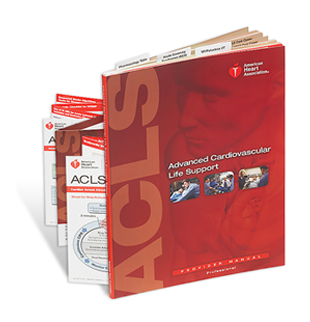
Hi guys, we just finished up the first day of the ACLS initial course. The ACLS certification course is approved by the American Heart Association. Those of you who have never attended an advanced cardiac life support program, you must attend the American Heart Association today initial program in order to be certified in advanced cardiac life support. There are many different components that make up this program. You must be very well versed in the recognition of EKG arrhythmias. Pharmacology as well as EKG interpretation is a must in order to do well in the initial ACLS course.

As we move forward into the new millennium, technology will help the Allied healthcare provider with the interpretation of EKG’s. We will be providing an online ACLS refresher course for those of you who need additional training. We will be teaching EKG as well as the ACLS algorithms. In addition, we will have video demonstrations on the core components of doing excellent cardiopulmonary resuscitation with the implementation of advanced life support. Our instructors will demonstrate how I’m Allied healthcare provider should transition from one algorithm to the next. For those of you who would be interested in purchasing our video, please fill free to contact us by phone or by e-mail. For any additional questions or further inquiries please reach us through our contact information page posted on our website.

Nov
06

Medicine and Technology

By · Comments (0)

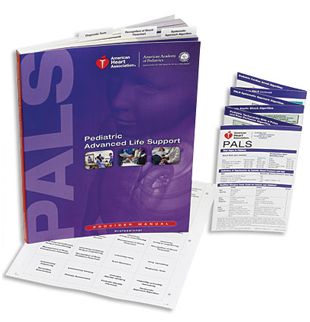
The medical community has moved into the new millennium in relation to high tech and high touch medical equipment, skills and technology. Doctors have taken precautions to further the well being of their patients as well by attending advanced medical certification courses. The PALS certification course provides medical specialist with an unique set of skills. Defibrillation and intubation in conjunction with the administration of cardiac medications makes a superior difference in the outcome of the cardiac arrest victim. Science has shown that excellent compressions with attention to advanced airway management will aid in the saving of a life. Thermodynamics plays a major role in the long term recovery of each patient if they have return of spontaneous circulation. Cooling a patient’s core temperature down to 32 or 34 degrees Celsius has proven to slow the overall metabolic rate and prevents further cellular death. By decreasing the metabolic rate we are able to preserve the neural tissue in the cerebellum. In layman’s terms, we save the brain from biological death.

Life Form has aided in the education of the advanced cardiac life support provider by supplying CPR manikins to the local medical institutions. CPR manikins along with the intubation manikin teaches first year medical students, new nurses and paramedics how to resuscitate someone who is in cardiac arrest. This practice or practical scenarios is vital not only to the medical health care provider, but to the well being of the community as a whole. As stated before, technology and the advancement of the health care industry has seen great strides in helping to save lives. Capnography is a major component in measuring end tidal CO2 in reference to the adequacy of cardiac pulmonary resuscitation. Years ago, we would have not seen this as a vital instrument to evaluate resuscitation efforts. The reason being is simple. The technology was not yet readily available for the civilian sector. As a final note, we must continue to advance ourselves in conjunction with the development of technology.